
A Guide to Hiring Landscaping and Yard-Work Labor
Landscaping and yard work suit day labor well when you plan the tasks, tools, green waste, and safety first.
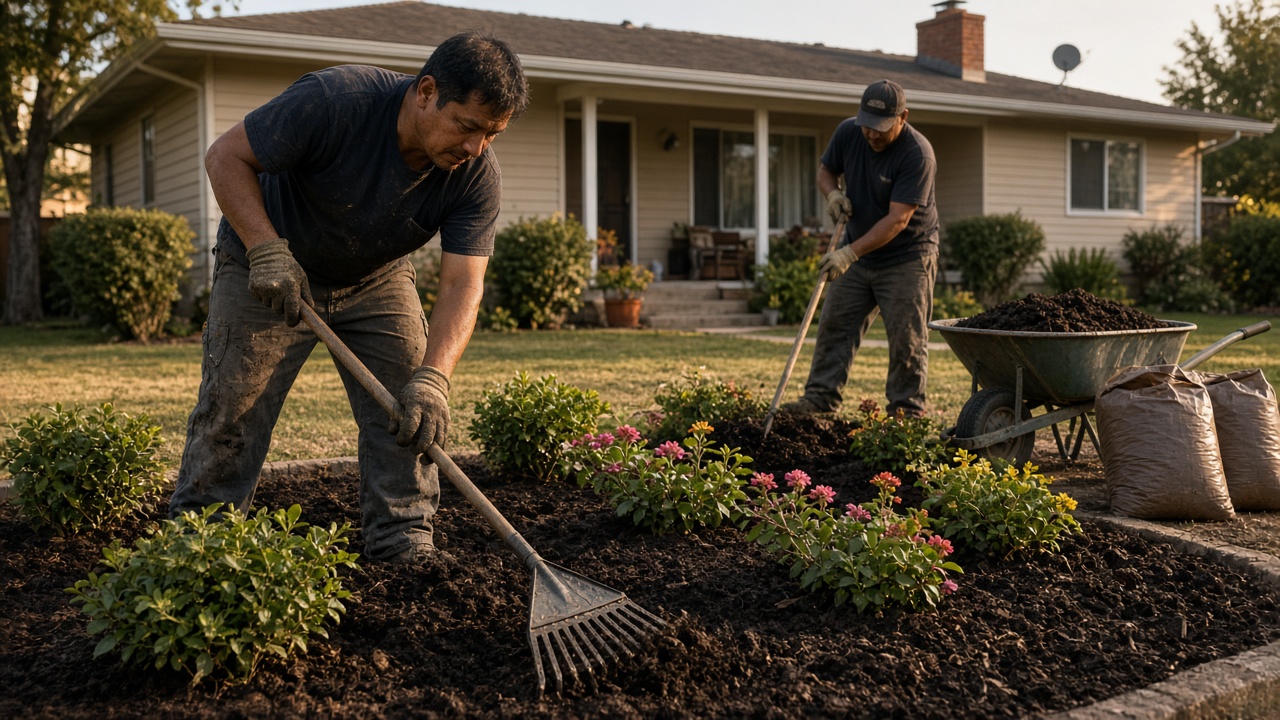
Landscaping and yard work suit day labor well when you plan the tasks, tools, green waste, and safety first.
Yard work is one of the most common reasons homeowners hire day laborers. Mulching, weeding, hauling, planting, and seasonal cleanup are physical, clear, and easy to check when they are done. But a few landscaping tasks cross into licensed or dangerous territory. This guide helps you sort the jobs, prepare the yard, and hire the right help.
Which yard jobs fit day labor
These jobs are usually a good match for hired general labor.
- Spreading mulch, rock, or soil
- Weeding, edging, and clearing overgrown beds
- Raking, leaf cleanup, and bagging green waste
- Planting shrubs, perennials, and small trees
- Moving pavers, stone, or landscape materials
- Digging planting beds or trenches for edging (after 811, below)
- Hauling brush and debris to a trailer or dumpster
- Mowing and trimming, if the worker knows the equipment
Arizona's contractor law, for example, specifically exempts a person who works as a gardener doing lawn, garden, shrub, and tree maintenance from contractor licensing (https://azleg.gov/ars/32/01121.htm). Other states draw the line differently, so check yours.
Which yard jobs need a licensed pro
Some landscaping work is regulated or dangerous enough that you should not hand it to a general laborer.
- Tree work near power lines. OSHA says all tree trimming or removal within 10 feet of a power line must be done by trained and experienced line-clearance tree trimmers (https://www.osha.gov/sites/default/files/tree_trimming_safety.pdf)
- Large tree removal and climbing work, which carry serious fall and struck-by risks
- Pesticide and herbicide application for hire, which many states regulate through pesticide applicator licensing; check with your state agriculture department
- Irrigation installation, which some cities treat as a licensed trade. Austin, for example, lists irrigation among the trades that require a license (https://www.austintexas.gov/development-services/how-select-contractor)
- Retaining walls, grading that changes drainage, or anything that needs a permit
- Outdoor electrical work such as landscape lighting connected to house power
When in doubt, call your city's building or permitting office. A laborer can still help a licensed pro by hauling and cleaning up.
Step 1 Call 811 before anyone digs
Planting a shrub or setting a border can hit a buried line. 811 is the national call-before-you-dig number, and the 811 organization says any digging requires contacting your state 811 center a few business days ahead, then waiting until all utilities have responded (https://call811.com/before-you-dig/). If you are only digging in part of the yard, you can outline that area in white paint or flags. Ask your 811 center whether private lines you installed, such as sprinkler or lighting lines, will be marked. If not, flag them yourself.
Step 2 Plan the tasks and the order
Walk the yard and write a task list in the order the work should happen. A typical order is clear and haul first, then dig and plant, then spread mulch or rock, then clean up. Mark plants that stay with flagging tape. Mark anything fragile, like drip lines or a septic lid.
Note quantities where you can: "eight yards of mulch in the front beds," "remove the three dead junipers," "fill two contractor bags of weeds per bed." Numbers make it easier to estimate time and to check the work.
Step 3 Decide who brings the equipment
Equipment is the most common surprise in yard jobs. Settle it in the job post.
- Hand tools: shovels, rakes, wheelbarrows, pruners, loppers
- Power equipment: mower, string trimmer, blower, hedge trimmer
- Fuel and extension cords
- Gloves, eye protection, and hearing protection for power tools
- Tarps and bags for green waste
If workers use their own power equipment, expect to pay more, and ask what they bring. If they use yours, show them how it works and make sure guards and safety switches are in place.
Step 4 Plan the green waste
Green waste adds up fast. Decide before the job whether it goes in your city's yard-waste bins, a rented dumpster, a trailer the crew hauls to a transfer station, or a compost pile. Check your city's limits on bin pickup and any disposal fees. If the crew hauls it away, agree on who pays dump fees and include it in the price.
Step 5 Set the pay and post the job
For a national reference, the Bureau of Labor Statistics reports a May 2025 median of $19.27 an hour for grounds maintenance workers, and $18.82 for landscaping and groundskeeping workers (https://www.bls.gov/ooh/building-and-grounds-cleaning/grounds-maintenance-workers.htm). Local day rates vary, and your pay must at least meet your state and local minimum wage.
Your post should include the tasks and quantities, the yard size, whether there are slopes, who brings equipment, the green-waste plan, the date and start time, and the pay. ChambaNOW is free to post, and you can message applicants about that yard job. See local pages such as https://chambanow.com/hire/phoenix-az/landscaping, https://chambanow.com/hire/san-diego-ca/yard_work, or https://chambanow.com/hire/fresno-ca/yard_work, or start at https://chambanow.com/for-hirers.
Step 6 Keep the crew safe outdoors
Heat is the biggest everyday risk in yard work. OSHA recommends cool water, rest, and shade, with breaks that get longer and more frequent as heat rises (https://www.osha.gov/heat-exposure/water-rest-shade). Start early on hot days and keep water close to the work.
OSHA's landscaping page notes that many workers in this industry are Hispanic and that employers must train workers in a language and vocabulary they understand (https://www.osha.gov/landscaping). In practice, explain the job and the hazards in a language the crew understands, and use gestures and demonstrations when needed.
Watch for these other common hazards.
- Mower and trimmer debris. Clear rocks and sticks first and keep kids and pets inside
- Chainsaws. OSHA's chainsaw guidance calls for proper protective gear, including chaps, and warns against cutting above shoulder height or from a ladder (https://www.osha.gov/sites/default/files/publications/CHAINSAWS.pdf)
- Lifting heavy bags and stone. Use wheelbarrows and two-person lifts
- Slopes and wet grass. Avoid mowing steep slopes when wet
How to tell good yard work from rushed work
You do not need to be a landscaper to judge the result. Check a few things before the crew packs up.
- Beds are weeded to the root, not just topped
- Mulch is spread evenly and kept a few inches back from stems and trunks
- New plants sit at the right depth, are watered in, and have their tags and pots removed
- Edges are clean, and walkways and driveways are swept or blown clear
- Bags and debris are gone, or stacked where you agreed
If something is off, say so kindly and specifically while the crew is still there. Most workers would rather fix it on the spot than lose a repeat customer.
Step 7 Check the work and pay
Walk the yard with the crew at the end. Compare it to the task list, point out anything missed while they are still there, and pay in full as agreed.
Yard-work hiring checklist
- Tasks written down in order, with quantities
- Plants that stay flagged; sprinkler lines marked
- 811 contacted and all utilities responded, if anyone will dig
- Equipment, fuel, and protective gear settled
- Green-waste plan and fees agreed
- No tree work near power lines and no pesticide spraying by general labor
- Water, shade, and an early start on hot days
- Final walkthrough before paying
This guide is general information. Licensing and pesticide rules vary by state and city, so check with your local authorities.
Sources
- Arizona Revised Statutes 32-1121: https://azleg.gov/ars/32/01121.htm
- OSHA, Tree Trimming Safety: https://www.osha.gov/sites/default/files/tree_trimming_safety.pdf
- City of Austin, How to Select a Contractor: https://www.austintexas.gov/development-services/how-select-contractor
- 811, Before You Dig: https://call811.com/before-you-dig/
- Bureau of Labor Statistics, Grounds Maintenance Workers: https://www.bls.gov/ooh/building-and-grounds-cleaning/grounds-maintenance-workers.htm
- OSHA, Water. Rest. Shade.: https://www.osha.gov/heat-exposure/water-rest-shade
- OSHA, Landscaping and Horticultural Services: https://www.osha.gov/landscaping
- OSHA, Working Safely with Chainsaws: https://www.osha.gov/sites/default/files/publications/CHAINSAWS.pdf
Written by Barry Graham, Founder, ChambaNOW
Building knowledge that works.